
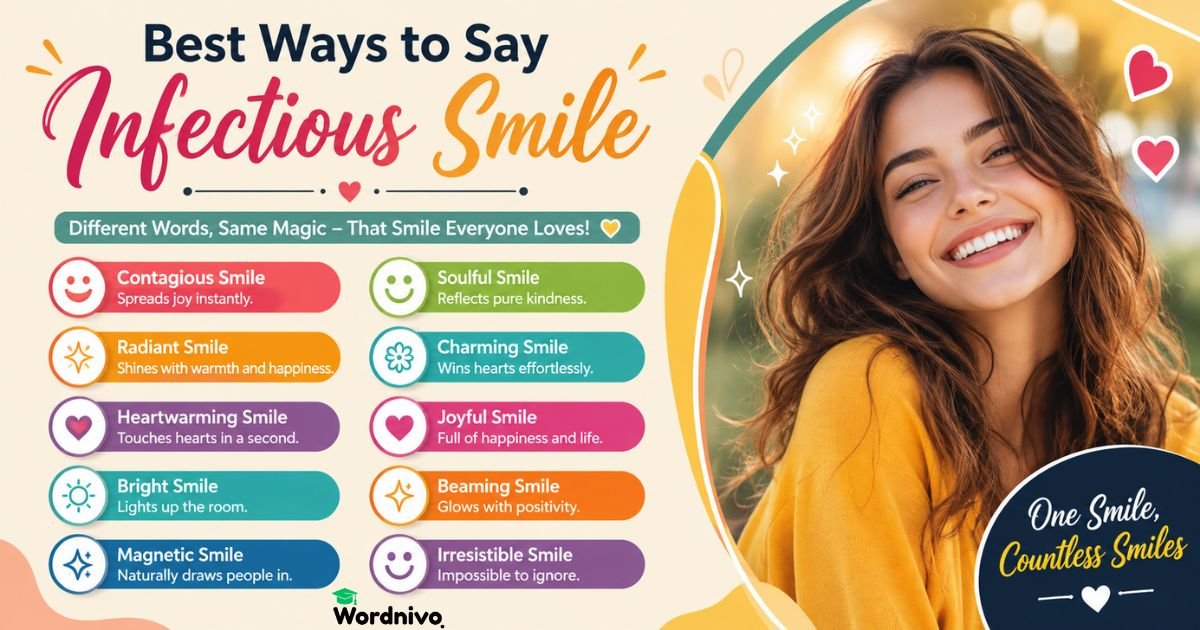
20 Best Alternate Of “Infectious Smile” With Example
A genuine infectious smile can change the mood of a room, lift someone’s spirits, and make a simple moment feel warmer. It is a warm, joyful expression that naturally makes others feel happy and welcome.
But what exactly makes a smile infectious, and why do some smiles naturally encourage others to smile back? In everyday life, we often notice this effect through facial expressions, positive energy, laughter, and emotional connection.
A warm smile can communicate friendliness, happiness, confidence, and kindness without saying a word. Understanding the meaning of an infectious smile can also help you choose the right words for captions, compliments, messages, and everyday conversations.
This guide explores what an infectious smile means, how to describe it naturally, and the feelings it can express. You’ll also discover useful examples, related expressions, and practical ways to use the phrase in different situations.
What Does “Infectious Smile” Mean?
An infectious smile is a happy, warm smile that naturally makes other people want to smile too. It often shows joy, kindness, friendliness, and positive energy without needing words.
When to Use “Infectious Smile”
Use “infectious smile” when you want to compliment someone whose smile easily spreads happiness. It works well in compliments, captions, messages, social posts, and personal conversations.
Example: “Your infectious smile always makes everyone feel welcome.”
Is It Professional or Polite to Say “Infectious Smile”?
Yes, “infectious smile” is generally polite and positive. It can work in professional settings when the tone is friendly, but for formal communication, phrases like “warm smile” or “welcoming smile” may sound more appropriate.
Pros and Cons of “Infectious Smile”
“Infectious smile” is a positive phrase used for a smile that naturally makes others feel happy or smile back.
| Pros | Cons |
| Warm: Shows kindness and happiness. | Slightly informal: May not suit very formal writing. |
| Positive: Creates a cheerful feeling. | Figurative: “Infectious” is not literal here. |
| Expressive: Makes a compliment more vivid. | Context matters: It may sound personal in some settings. |
| Easy to understand: Clearly suggests shared joy. | Can feel common: Repeating it may make writing less fresh. |
| Good for compliments: Works well in friendly messages and captions. | May sound too personal: Use care when complimenting someone at work. |
Quick takeaway: Use “infectious smile” when you want to highlight a smile’s warmth, charm, and positive effect on others.
Synonyms List about “Infectious Smile”
- Effortless Glow
- Magnetic Smile
- Glow-Worthy Grin
- Irresistible Smile
- Pure Joy
- Radiant Smile
- Contagious Grin
- Heartwarming Smile
- Joyful Expression
- Beaming Smile
- Cheerful Smile
- Uplifting Smile
- Warm Smile
- Bright Smile
- Genuine Smile
- Sunny Smile
- Playful Grin
- Inviting Smile
- Happy Glow
- Positive Expression
Effortless Glow
Meaning: “Effortless glow” describes a natural, warm, and attractive appearance that does not seem forced or carefully created.
Definition: The phrase suggests that someone’s smile, expression, or overall presence naturally gives off happiness, confidence, and charm.
Tone: The tone is warm, positive, admiring, and uplifting.
Example: “Her effortless glow makes everyone around her feel more cheerful.”
Explanation: This phrase highlights natural beauty and positive energy rather than focusing only on physical appearance. It works well for describing a genuine smile that seems bright without any effort.
Purpose and Personalization: Use it for compliments, captions, photos, or personal messages when you want to praise someone’s natural charm. For a simpler option, say natural glow or warm smile.
Magnetic Smile
Meaning: “Magnetic smile” describes a powerful and charming smile that naturally attracts people’s attention.
Definition: The phrase suggests that someone’s smile has a strong appeal, warmth, or charm that makes others want to connect with them.
Tone: The tone is admiring, confident, warm, and sometimes romantic.
Example: “Her magnetic smile made everyone feel welcome from the moment she arrived.”
Explanation: “Magnetic” is used figuratively to show that the smile has a strong emotional pull. It can describe someone who easily captures attention through a friendly and engaging expression.
Purpose and Personalization: Use it in compliments, captions, romantic messages, or creative descriptions. In professional settings, a welcoming smile may sound more appropriate.
Glow-Worthy Grin
Meaning: “Glow-worthy grin” describes a bright, happy, and noticeable smile that deserves attention or praise.
Definition: The phrase combines “glow-worthy,” meaning especially appealing or cheerful, with “grin,” meaning a broad smile.
Tone: The tone is playful, cheerful, casual, and positive.
Example: “That glow-worthy grin can brighten even the busiest day.”
Explanation: This expression focuses on the fun and cheerful quality of a big smile. It sounds more playful than formal, making it a good choice for lighthearted content.
Purpose and Personalization: Use it for social media captions, friendly compliments, photos, and casual messages. For formal writing, choose a bright smile or cheerful expression instead.
Irresistible Smile
Meaning: “Irresistible smile” describes a very charming or appealing smile that naturally catches someone’s attention.
Definition: The phrase suggests that a person’s smile has a strong charm, warmth, or attractiveness that is difficult to ignore.
Tone: The tone is admiring, affectionate, charming, and sometimes romantic.
Example: “Your irresistible smile always brings a little happiness to the people around you.”
Explanation: The phrase can describe both emotional warmth and physical appeal, depending on the context. Because it can sound personal, the relationship between the speaker and listener matters.
Purpose and Personalization: Use it in romantic messages, personal compliments, captions, or creative writing. For a workplace setting, a welcoming smile is usually a safer and more neutral choice.
Pure Joy
Meaning: “Pure joy” describes a genuine feeling of deep happiness that can clearly appear through someone’s smile or expression.
Definition: The phrase refers to true, uncomplicated happiness, especially during a meaningful or exciting moment.
Tone: The tone is genuine, heartfelt, positive, and emotional.
Example: “Her smile showed pure joy when she received the good news.”
Explanation: Unlike phrases that focus on beauty or attraction, “pure joy” focuses on the emotion behind the smile. It works especially well when someone’s happiness feels natural and sincere.
Purpose and Personalization: Use it for special moments, celebrations, family memories, heartfelt captions, and personal messages. For a simpler expression, you can say genuine happiness or true delight.
Radiant Smile
Meaning: “Radiant smile” describes a bright, beautiful, and joyful smile that seems full of positive energy.
Definition: The phrase suggests that someone’s smile looks warm, lively, and glowing, often making their happiness easy to notice.
Tone: The tone is warm, admiring, positive, and uplifting.
Example: “Her radiant smile made the whole celebration feel even more special.”
Explanation: “Radiant” suggests something that seems to shine or give off light, so this phrase is often used to praise a smile that looks especially happy and bright.
Purpose and Personalization: Use it for compliments, captions, special occasions, and personal messages when you want to highlight someone’s natural happiness. For a simpler option, use a bright smile or joyful smile.
Contagious Grin
Meaning: “Contagious grin” describes a big, cheerful smile that makes other people want to smile too.
Definition: The phrase uses “contagious” in a figurative way to show how one person’s happiness can spread to people nearby.
Tone: The tone is playful, friendly, cheerful, and positive.
Example: “His contagious grin had everyone laughing within minutes.”
Explanation: This expression focuses on the effect of a smile on other people. It suggests that the person’s happiness is easy to notice and can quickly create a happier mood around them.
Purpose and Personalization: Use it for casual compliments, social captions, friendly messages, and fun descriptions. For formal writing, a cheerful smile may sound more suitable.
Heartwarming Smile
Meaning: “Heartwarming smile” describes a kind and sincere smile that creates a warm, happy feeling.
Definition: The phrase suggests that someone’s smile brings comfort, affection, kindness, or emotional warmth to the people who see it.
Tone: The tone is gentle, caring, sincere, and affectionate.
Example: “Her heartwarming smile made everyone feel welcome.”
Explanation: This phrase focuses less on how a smile looks and more on how it makes others feel. It works especially well when describing genuine kindness or a meaningful moment.
Purpose and Personalization: Use it for family moments, heartfelt captions, personal compliments, and emotional messages. It is also a good choice when you want your words to sound sincere rather than romantic.
Joyful Expression
Meaning: “Joyful expression” describes a face or smile that clearly shows happiness and delight.
Definition: The phrase refers to visible signs of genuine joy, such as smiling, bright eyes, or an excited facial expression.
Tone: The tone is positive, clear, warm, and slightly more formal.
Example: “His joyful expression showed how much the good news meant to him.”
Explanation: Unlike “smile,” this phrase can describe more than just the mouth. It may include the entire face and body language that show someone is truly happy.
Purpose and Personalization: Use it in articles, stories, descriptions, school writing, and everyday conversations when you want to describe visible happiness. For casual speech, a happy expression or big smile may sound more natural.
Beaming Smile
Meaning: “Beaming smile” describes a very bright and obvious smile that shows strong happiness.
Definition: The phrase suggests that someone is smiling widely because they feel proud, excited, pleased, or deeply happy.
Tone: The tone is cheerful, warm, energetic, and positive.
Example: “She walked into the room with a beaming smile after hearing the good news.”
Explanation: “Beaming” suggests that happiness seems to shine from the person’s face. It is especially useful when someone cannot hide how pleased or excited they feel.
Purpose and Personalization: Use it for celebrations, achievements, happy announcements, photos, and personal compliments. It is a natural choice when you want to show strong and visible happiness.
Cheerful Smile
Meaning: “Cheerful smile” describes a happy, friendly smile that shows a positive and pleasant mood.
Definition: The phrase refers to a smile that expresses happiness, friendliness, and good spirits, often making others feel comfortable.
Tone: The tone is friendly, positive, simple, and welcoming.
Example: “Her cheerful smile made everyone feel relaxed at the gathering.”
Explanation: This phrase focuses on the happy feeling behind a smile rather than its physical appearance. It is easy to understand and works naturally in everyday English.
Purpose and Personalization: Use it for compliments, captions, messages, stories, and everyday conversations. It is also a good choice when you want a positive phrase that does not sound overly romantic.
Uplifting Smile
Meaning: “Uplifting smile” describes a smile that raises someone’s mood and brings a sense of happiness or hope.
Definition: The phrase highlights the positive effect a smile can have on another person’s feelings.
Tone: The tone is encouraging, warm, caring, and positive.
Example: “Your uplifting smile always makes difficult days feel a little easier.”
Explanation: The main focus is not simply on how the smile looks but on how it makes people feel. It works well when describing someone whose presence brings comfort or encouragement.
Purpose and Personalization: Use it in heartfelt compliments, supportive messages, social captions, and personal notes. It is especially useful when you want to praise the emotional impact of someone’s smile.
Warm Smile
Meaning: “Warm smile” describes a kind, friendly, and welcoming smile that makes people feel comfortable.
Definition: The phrase refers to a genuine smile that communicates kindness, friendliness, care, and openness.
Tone: The tone is gentle, sincere, respectful, and welcoming.
Example: “She greeted every guest with a warm smile.”
Explanation: A warm smile often suggests that someone is approachable and happy to connect. Unlike more romantic expressions, this phrase is usually safe and natural in both personal and professional settings.
Purpose and Personalization: Use it for compliments, professional descriptions, thank-you messages, introductions, and everyday conversations. It is one of the most versatile ways to describe a friendly smile.
Bright Smile
Meaning: “Bright smile” describes a cheerful, noticeable smile that gives an impression of happiness and positive energy.
Definition: The phrase can describe a smile that looks lively, happy, and full of charm.
Tone: The tone is positive, cheerful, simple, and admiring.
Example: “His bright smile made the photo feel full of life.”
Explanation: “Bright” can describe both the look and feeling of a smile. It suggests something lively and pleasant without sounding too formal or emotional.
Purpose and Personalization: Use it for photo captions, friendly compliments, personal messages, and casual descriptions. It is a simple alternative when you want to praise someone without using overly strong language.
Genuine Smile
Meaning: “Genuine smile” describes a real and sincere smile that naturally reflects how someone feels.
Definition: The phrase refers to a smile that appears honest, natural, and heartfelt, rather than forced or fake.
Tone: The tone is sincere, respectful, warm, and trustworthy.
Example: “Her genuine smile showed how happy she was to see her old friends.”
Explanation: This phrase focuses on the authentic emotion behind the expression. It is especially useful when you want to show that someone’s happiness feels real and comes naturally.
Purpose and Personalization: Use it for personal compliments, heartfelt writing, professional descriptions, captions, and meaningful messages. It is a strong choice when you want to emphasize authenticity and true emotion.
Sunny Smile
Meaning: “Sunny smile” describes a bright, cheerful smile that brings a feeling of warmth and happiness.
Definition: The phrase compares someone’s smile to sunshine, suggesting that it can make a moment feel lighter and more pleasant.
Tone: The tone is warm, cheerful, friendly, and uplifting.
Example: “Her sunny smile brightened the room as soon as she walked in.”
Explanation: This expression focuses on the warm and positive feeling created by a smile. It is often used to describe someone who naturally brings happiness to those around them.
Purpose and Personalization: Use it for compliments, captions, personal messages, and creative descriptions when you want to express warmth and positivity. It is especially suitable for friendly, lighthearted writing.
Playful Grin
Meaning: “Playful grin” describes a fun, mischievous, or lighthearted smile that shows someone is enjoying the moment.
Definition: The phrase refers to a grin that may suggest humor, teasing, excitement, or a fun personality.
Tone: The tone is casual, fun, cheerful, and slightly mischievous.
Example: “He gave me a playful grin before starting the joke.”
Explanation: A playful grin often communicates more than happiness. It can show that someone is joking, teasing, or about to do something amusing.
Purpose and Personalization: Use it in casual conversations, captions, stories, friendly compliments, and humorous writing. It is a good choice when you want to describe a smile with personality and fun.
Inviting Smile
Meaning: “Inviting smile” describes a friendly and welcoming smile that encourages people to feel comfortable or start a conversation.
Definition: The phrase suggests that someone’s smile communicates openness, kindness, and friendliness.
Tone: The tone is welcoming, polite, warm, and approachable.
Example: “Her inviting smile made it easy for the new guests to join the conversation.”
Explanation: This phrase focuses on how a smile can make someone seem approachable and easy to talk to. It does not necessarily have a romantic meaning, so it works well in many social situations.
Purpose and Personalization: Use it for professional descriptions, introductions, compliments, social situations, and personal writing. It is a useful choice when you want to praise someone’s friendly nature without sounding overly personal.
Happy Glow
Meaning: “Happy glow” describes the bright, positive look someone has when they feel genuinely happy.
Definition: The phrase refers to a visible sense of joy and positive energy that may appear through a smile, eyes, or overall expression.
Tone: The tone is positive, warm, affectionate, and uplifting.
Example: “You could see her happy glow after she received the wonderful news.”
Explanation: Unlike “smile,” this phrase describes a person’s overall appearance and mood, not just their facial expression. It works especially well when happiness seems clear from someone’s whole presence.
Purpose and Personalization: Use it in captions, personal messages, celebrations, and descriptions of happy moments. It can make your writing feel warm without directly focusing only on someone’s smile.
Positive Expression
Meaning: “Positive expression” describes a facial look that communicates happiness, kindness, confidence, or a good mood.
Definition: The phrase refers to a visible expression that gives others a pleasant and encouraging impression.
Tone: The tone is neutral, clear, professional, and positive.
Example: “Her positive expression helped create a friendly atmosphere during the meeting.”
Explanation: This is a broader phrase than “smile” because it can include facial expressions, eye contact, and other signs of a positive mood. It is useful when you want a neutral description rather than a highly emotional compliment.
Purpose and Personalization: Use it in professional writing, articles, formal descriptions, and everyday communication. When you want a more personal and vivid phrase, a warm smile or cheerful expression may sound more natural.
Infectious Smile vs. Similar Smile Expressions
| Expression | Meaning | Best For | Tone | Key Difference | Example |
| Infectious Smile | A smile that naturally makes others feel happy or smile too. | Compliments, captions, personal messages | Warm, cheerful | Focuses on how a smile spreads happiness. | “Her infectious smile brightened the whole room.” |
| Contagious Grin | A big, happy grin that makes others want to smile. | Casual captions, friendly conversations | Playful, fun | More casual and energetic than “infectious smile.” | “His contagious grin had everyone laughing.” |
| Radiant Smile | A bright, glowing smile that shows happiness. | Compliments, photos, special occasions | Admiring, elegant | Focuses more on the smile’s brightness and beauty. | “She greeted everyone with a radiant smile.” |
| Heartwarming Smile | A kind smile that creates feelings of comfort and warmth. | Personal messages, heartfelt writing | Caring, sincere | Emphasizes the emotional comfort a smile creates. | “Her heartwarming smile made everyone feel welcome.” |
| Genuine Smile | A natural, sincere smile that reflects real emotion. | Personal and professional settings | Sincere, trustworthy | Focuses on authenticity, not its effect on others. | “His genuine smile showed how happy he was.” |
| Warm Smile | A friendly, kind, and welcoming smile. | Professional and everyday use | Polite, friendly | More neutral and versatile than “infectious smile.” | “She welcomed us with a warm smile.” |
| Uplifting Smile | A smile that improves someone’s mood or gives encouragement. | Supportive messages, compliments | Encouraging, positive | Focuses on the smile’s mood-lifting effect. | “Your uplifting smile always cheers me up.” |
| Beaming Smile | A very bright, wide smile showing strong happiness. | Celebrations, achievements, photos | Excited, joyful | Highlights visible and strong happiness. | “He had a beaming smile after winning.” |
Conclusion
An infectious smile is more than a bright facial expression; it is a simple way to show happiness, warmth, kindness, and positive energy. The best phrase depends on what you want to express: choose “genuine smile” for sincerity, “heartwarming smile” for emotional warmth, or “radiant smile” for brightness and charm.
Paying attention to tone, context, and audience helps your words sound natural rather than forced. Whether you are writing a compliment, caption, message, or personal description, the right expression can make your meaning clearer and more memorable. A simple smile may say a lot, but the right words can help others feel its warmth, too.
FAQs
1. What does “infectious smile” mean?
An infectious smile is a warm, genuine smile that naturally makes other people feel happier or smile themselves. The word “infectious” is figurative, not literal. It highlights how a person’s positive expression can spread joy, warmth, and good energy to people nearby.
2. Is “infectious smile” a compliment?
Yes, “infectious smile” is a positive and thoughtful compliment. It suggests that someone’s smile is not only pleasant but also has a happy effect on others. For example, “You have an infectious smile” can express admiration for someone’s cheerful and welcoming personality.
3. When should you use the phrase “infectious smile”?
Use “infectious smile” when describing a smile that seems to brighten the mood around it. It works well in captions, compliments, personal messages, and casual conversations. For example: “Her infectious smile made everyone feel comfortable at the gathering.”
4. Is “infectious smile” professional to use?
“infectious smile” can be polite in professional settings, especially in friendly conversations or personal descriptions. However, it may sound slightly informal or personal in formal writing. In those situations, “warm smile,” “friendly smile,” or “welcoming smile” may be more suitable.
5. What is the difference between an infectious smile and a genuine smile?
An infectious smile focuses on the effect a smile has on other people, while a genuine smile focuses on whether the emotion behind it feels real and sincere. A smile can be both genuine and infectious when authentic happiness naturally encourages others to smile too.
6. What are some good alternatives to “infectious smiles”?
Useful alternatives include “contagious grin,” “radiant smile,” “heartwarming smile,” “uplifting smile,” and “beaming smile.” Choose the phrase based on your meaning: “radiant” highlights brightness, “heartwarming” emphasizes emotional warmth, and “contagious” or “infectious” highlights the smile’s ability to spread happiness.

Hi, I am Ethan Mattew, the Admin of wordnivo.com, sharing simple English learning resources. Explore English grammar, synonyms, vocabulary, and word meanings with ease.


