
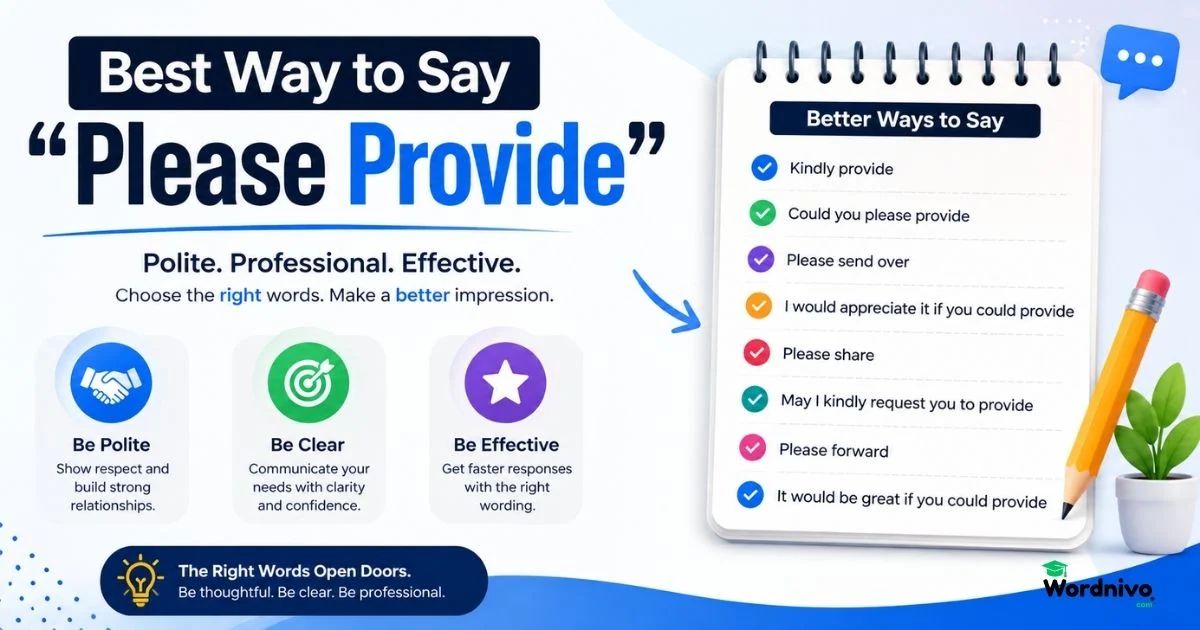
20 Best Way to Say “Please Provide” With Example
“Please Provide” is a polite way to ask someone for information, documents, or details. Learning how to use it naturally can help you make your message clear, friendly, and respectful.
When someone asks you to “Please Provide” something, the phrase may sound simple, but its meaning and tone can change depending on the situation. Whether you are writing a professional email, making a polite request, responding to a colleague, or asking for specific information, choosing the right wording matters.
Please Provide is commonly used to request details, documents, examples, clarification, or other needed information in a clear and courteous way. However, context can affect whether it sounds polite, formal, direct, or slightly demanding.
This guide explains the meaning of Please Provide, shows how to use it naturally in different situations, and explores warmer alternatives that can make your message feel more personal.
You will also find practical examples, tone differences, suitable contexts, and professional alternatives to communicate with confidence.
What Does “Please Provide” Mean?
“Please Provide” means “kindly give or share something that is needed.” It is often used when asking for information, documents, details, examples, or clarification in a clear and respectful way.
When to Use “Please Provide”
Use “Please Provide” when you need something specific from another person. It works well in emails, workplace messages, forms, applications, and formal requests. For example: “Please provide your contact details.”
Is It Professional or Polite to Say “Please Provide”?
Yes, “Please Provide” is generally professional and polite. However, it can sound a little formal or direct in some situations. For a warmer tone, you can use phrases such as “Could you please share…” or “Would you mind providing…”.
Pros and Cons of “Please Provide”
“Please Provide” is a clear, polite, and professional way to request information or documents. It works especially well in formal emails, workplace requests, and official communication, but it can sometimes feel stiff or impersonal if used too often.
| Pros | Cons |
| Clear: Makes your request easy to understand. | Formal: May feel too stiff in casual chats. |
| Polite: “Please” adds courtesy to the request. | Less Warm: Can sound impersonal in friendly messages. |
| Professional: Fits business and formal emails. | Repetitive: Overuse can make writing feel robotic. |
| Direct: Clearly tell the reader what you need. | Firm: May sound demanding without added context. |
| Versatile: Works for files, details, data, and updates. | Generic: May lack a personal or friendly touch. |
Best tip: Use “Please Provide” when you want clarity and professionalism. For a warmer tone, try “Could you please share…” or “Would you mind sending…”.
Synonyms List about “Please Provide”
- Could You Kindly Forward
- Would You Kindly Send
- Please Pass Along
- Could You Send Me
- I’d Be Grateful If You Could
- Could You Share
- Kindly Send
- Please Share
- Would You Mind Sharing
- Could You Please Send
- Please Forward
- May I Request
- I’d Appreciate It If You Could
- Please Let Me Have
- Could You Provide
- Please Send Over
- Would You Be Able to Share
- Please Supply
- Kindly Provide
- Please Make Available
Could You Kindly Forward

Meaning: This phrase is a polite way to ask someone to forward an email, file, message, or document to you or another person.
Definition: “Could you kindly forward” means “Would you please send or pass this information along?” It is often used in professional communication.
Tone: The tone is polite, respectful, formal, and professional. “Kindly” makes the request sound more courteous.
Example: “Could you kindly forward the updated report to me?”
Explanation: This phrase works well when you need someone to forward existing information rather than create or provide something new. It is common in business emails and workplace requests.
Purpose and Personalization: Use it when you want your request to sound respectful and professional. Add the specific file, message, or recipient to make the request clear.
Would You Kindly Send
Meaning: This phrase politely asks someone to send something you need, such as a document, file, message, or piece of information.
Definition: “Would you kindly send” means “Could you please send this to me?” It gives a formal and courteous way to make a request.
Tone: The tone is formal, respectful, courteous, and slightly traditional.
Example: “Would you kindly send me the updated project details?”
Explanation: This expression is useful in professional emails, formal requests, and business communication. It may sound more formal than “Could you send me,” especially in casual conversations.
Purpose and Personalization: Use it when you want to show respect and courtesy. Mention exactly what you need and, if important, include a deadline.
Please Pass Along
Meaning: This phrase means to give or forward a message, item, or information to another person.
Definition: “Please pass along” is a polite request to share something with someone else on your behalf.
Tone: The tone is friendly, polite, natural, and moderately informal.
Example: “Please pass along my thanks to everyone on the team.”
Explanation: Unlike “Please Provide,” this phrase usually involves sharing something with another person. It can be used for messages, updates, greetings, files, or information.
Purpose and Personalization: Use it when you want someone to forward your message or information. Include the recipient or exact message when more clarity is needed.
Could You Send Me
Meaning: This phrase is a simple and polite way to ask someone to send you something.
Definition: “Could you send me” means “Would you please send this to me?” It is a natural alternative to more formal request phrases.
Tone: The tone is polite, friendly, clear, and professional without sounding too formal.
Example: “Could you send me the meeting notes when you have time?”
Explanation: This phrase works well in emails, workplace chats, text messages, and everyday conversations. It is especially useful when you want your request to sound natural and easy to understand.
Purpose and Personalization: Use it for clear, everyday requests. Add the specific item and deadline to make your message more useful, such as, “Could you send me the report by Friday?”
I’d Be Grateful If You Could
Meaning: This phrase makes a request while showing appreciation for the other person’s help.
Definition: “I’d be grateful if you could” means “I would really appreciate it if you could do this.” It is a thoughtful alternative to a direct request.
Tone: The tone is warm, respectful, appreciative, and professional.
Example: “I’d be grateful if you could provide the missing information.”
Explanation: This phrase is helpful when you want your request to feel considerate and personal. It works especially well for important requests or when someone is doing you a favor.
Purpose and Personalization: Use it when you want to show genuine appreciation while asking for help. Add a short reason when useful to make the request feel more natural.
Could You Share

Meaning: This phrase politely asks someone to give or share information, a file, document, or idea with you.
Definition: “Could you share” means “Would you please give me or let me see this?” It is a natural way to make a request.
Tone: The tone is polite, friendly, professional, and approachable.
Example: “Could you share the meeting notes with me?”
Explanation: This phrase works well in emails, workplace chats, group projects, and everyday conversations. It sounds less formal and more natural than some traditional request phrases.
Purpose and Personalization: Use it when you want to make a clear and friendly request. Mention exactly what you need or who should receive it.
Read More: Best Alternate Of “Just to Let You Know” With Example
Kindly Send
Meaning: This phrase politely asks someone to send a specific item, file, document, or piece of information.
Definition: “Kindly send” means “Please send this to me.” It is commonly used in formal and professional communication.
Tone: The tone is formal, respectful, courteous, and direct.
Example: “Kindly send the completed form by Monday.”
Explanation: This phrase is useful in business emails, official requests, and workplace communication. It is clear and respectful but can sound slightly formal in casual conversations.
Purpose and Personalization: Use it when you need something specific and want to keep your request professional. Add a deadline or format when it helps avoid confusion.
Please Share
Meaning: This phrase is a polite way to ask someone to give you information, details, files, or ideas.
Definition: “Please share” means “Please provide or let me see what you have.” It is simple and easy to understand.
Tone: The tone is polite, clear, friendly, and professional.
Example: “Please share the updated schedule with the team.”
Explanation: It works well in professional emails, team messages, social conversations, and collaborative tasks. It can refer to both digital and non-digital information.
Purpose and Personalization: Use it when you want a simple and direct request. Add the exact information or person involved to make the message more helpful.
Would You Mind Sharing
Meaning: This phrase asks someone to share something while showing extra politeness and consideration.
Definition: “Would you mind sharing” means “Would it be okay for you to share this with me?” It makes a request sound less demanding.
Tone: The tone is polite, gentle, respectful, and considerate.
Example: “Would you mind sharing the details of the event?”
Explanation: This phrase is useful when you want to ask for information without sounding too direct. It fits professional conversations as well as polite everyday requests.
Purpose and Personalization: Use it when the request may require time, effort, or a favor. Add “with me” or name the information you need for better clarity.
Could You Please Send

Meaning: This phrase is a polite way to ask someone to send you something specific.
Definition: “Could you please send” means “Would you kindly send this to me?” It combines a polite question with a clear request.
Tone: The tone is friendly, respectful, professional, and natural.
Example: “Could you please send me the final report today?”
Explanation: This is one of the most useful phrases for professional emails, workplace messages, and everyday communication. It sounds polite without being overly formal.
Purpose and Personalization: Use it when you want a request to feel clear and courteous. Include the item, recipient, and deadline when needed.
Please Forward
Meaning: This phrase politely asks someone to forward an email, message, file, or document to you or another person.
Definition: “Please forward” means “Please send this information or message to another person.” It is often used for existing content.
Tone: The tone is polite, clear, professional, and direct.
Example: “Please forward the client’s email to me when you have a chance.”
Explanation: This phrase works well in professional emails, workplace communication, and business requests. It is best when the information already exists and simply needs to be passed along.
Purpose and Personalization: Use it when you want someone to send existing information elsewhere. Mention the exact message, file, or recipient to make your request clear.
May I Request
Meaning: This phrase is a formal way to ask for something politely and respectfully.
Definition: “May I request” means “May I ask for this?” or “Would it be possible to ask for this?” It is often followed by the specific thing you need.
Tone: The tone is formal, respectful, careful, and courteous.
Example: “May I request a copy of the updated agreement?”
Explanation: This phrase is suitable for formal emails, official communication, customer service, and situations where extra politeness is helpful. It can sound too formal for casual conversations.
Purpose and Personalization: Use it when you want to make a respectful and formal request. Clearly state what you need so the reader can respond easily.
Read More: Best Alternate Of “Talk to You Then” With Example
I’d Appreciate It If You Could
Meaning: This phrase politely asks someone to do something while showing appreciation for their help.
Definition: “I’d appreciate it if you could” means “I would be thankful if you could do this.” It adds warmth to a request.
Tone: The tone is warm, respectful, appreciative, and professional.
Example: “I’d appreciate it if you could send the details by Friday.”
Explanation: This phrase works well when you want your request to sound considerate rather than demanding. It is especially useful for workplace emails and requests that require someone’s time or effort.
Purpose and Personalization: Use it when you want to show genuine appreciation. Add a clear action or deadline to make the request more useful.
Please Let Me Have
Meaning: This phrase politely asks someone to give or send you something you need, especially information or a document.
Definition: “Please let me have” means “Please give or provide this to me.” It is a more traditional way to make a request.
Tone: The tone is polite, formal, respectful, and slightly traditional.
Example: “Please let me have a copy of the final report.”
Explanation: This expression can appear in formal letters, business emails, and professional requests. However, “Please send me” or “Could you provide” often sounds more natural in modern everyday communication.
Purpose and Personalization: Use it when you want a formal and courteous style. For a simpler tone, replace it with a direct phrase such as “Could you send me the report?”
Could You Provide
Meaning: This phrase politely asks someone to give you specific information, details, documents, or resources.
Definition: “Could you provide” means “Would you please give or supply this information?” It is a common professional request.
Tone: The tone is polite, professional, clear, and moderately formal.
Example: “Could you provide the tracking number for my order?”
Explanation: This phrase works especially well in business emails, customer service, workplace communication, and formal requests. It is more natural than some highly formal alternatives while still sounding professional.
Purpose and Personalization: Use it when you need specific information or supporting material. Add the exact item, reason, or deadline when necessary to make your request clearer.
Please Send Over
Meaning: This phrase politely asks someone to send or share something, such as a file, document, email, or information.
Definition: “Please send over” means “Please send this to me or another person.” It is a natural phrase for everyday professional communication.
Tone: The tone is friendly, polite, clear, and professional.
Example: “Please send over the updated proposal when you have a chance.”
Explanation: This phrase works well in emails, workplace chats, and business conversations. It sounds less formal than “Please provide” while keeping the request respectful.
Purpose and Personalization: Use it when you want a simple and natural request. Add the exact file or information you need to make the message clear.
Would You Be Able to Share

Meaning: This phrase politely asks whether someone can share information, files, documents, or other resources with you.
Definition: “Would you be able to share” means “Could you share this with me if possible?” It gives the other person room to respond.
Tone: The tone is polite, considerate, friendly, and professional.
Example: “Would you be able to share the latest sales report?”
Explanation: This phrase is useful when you want to make a request without sounding demanding. It works well in workplace emails, team messages, and professional conversations.
Purpose and Personalization: Use it when you want to show consideration for the other person’s time or ability. Mention the specific item to make your request easier to understand.
Please Supply
Meaning: This phrase asks someone to give, provide, or deliver something that is needed.
Definition: “Please supply” means “Please provide the requested item, information, or material.” It is often used in formal settings.
Tone: The tone is formal, direct, professional, and businesslike.
Example: “Please supply the required documents before the application deadline.”
Explanation: This phrase is common in business, orders, official requests, and formal documents. It can sound less natural in casual conversation, where “Please send” or “Could you provide” may work better.
Purpose and Personalization: Use it when requesting specific materials, records, products, or information. Clearly state what is needed and when it should be supplied.
Kindly Provide
Meaning: This phrase is a courteous way to ask someone to give or share specific information, documents, or details.
Definition: “Kindly provide” means “Please provide this information or item.” It is commonly used in professional and formal communication.
Tone: The tone is polite, formal, respectful, and direct.
Example: “Kindly provide your contact details for further communication.”
Explanation: This phrase works well in business emails, official letters, forms, and customer communication. Although professional, repeated use of “kindly” can sometimes make a message feel stiff.
Purpose and Personalization: Use it when you want a formal and respectful request. Add the exact information or document needed so the recipient knows how to respond.
Please Make Available

Meaning: This phrase asks someone to make something accessible or ready for use, such as a document, resource, file, or service.
Definition: “Please make available” means “Please ensure that this is accessible to the person who needs it.” It focuses on access rather than simply sending something.
Tone: The tone is formal, professional, clear, and practical.
Example: “Please make the updated guidelines available to all team members.”
Explanation: This phrase is useful when something needs to be accessible to one person or a group rather than directly sent to someone. It commonly appears in workplace, administrative, and technical communication.
Purpose and Personalization: Use it when the main goal is to provide access to information or resources. Mention who should have access and, when relevant, where or when it should be available.
Read More: Best Alternate Of “I Will Look Into It” With Example
Please Provide vs. Polite Alternatives
| Phrase | Meaning | Best For | Tone & Formality | Example |
| Please Provide | Asks someone to give needed information or materials. | General professional requests | Polite, direct, moderately formal | “Please provide the required details.” |
| Could You Provide | Politely asks someone to give specific information or documents. | Emails and workplace requests | Friendly, professional | “Could you provide the updated report?” |
| Could You Share | Asks someone to share information, files, or details. | Team communication and collaboration | Friendly, polite | “Could you share the meeting notes?” |
| Could You Please Send | Politely asks someone to send something directly. | Emails, files, and documents | Polite, natural, professional | “Could you please send me the file?” |
| Please Forward | Ask someone to send existing information to another person. | Emails and messages | Direct, professional | “Please forward the email to me.” |
| Please Share | Requests information or content from someone. | Workplace and casual communication | Simple, friendly, polite | “Please share the latest update.” |
| Kindly Provide | Makes a formal request for information or documents. | Official and business communication | Formal, respectful | “Kindly provide your account details.” |
| I’d Appreciate It If You Could | Requests help while showing appreciation. | Important or considerate requests | Warm, respectful, professional | “I’d appreciate it if you could send the details.” |
| Would You Mind Sharing | Politely asks if someone is willing to share something. | Sensitive or considerate requests | Gentle, polite, less direct | “Would you mind sharing the file?” |
| Please Send Over | Ask someone to send something to you. | Workplace emails and chats | Friendly, natural, professional | “Please send over the final version.” |
Conclusion
Choosing the right wording for “Please Provide” can make a simple request feel clearer, more polite, and more natural. While the phrase works well in professional emails, workplace messages, and formal requests, alternatives such as “Could You Provide,” “Please Share,” or “Could You Please Send” may better match a friendly or less formal setting.
The key is to consider your audience, purpose, tone, and context before choosing your words. A thoughtful request helps avoid confusion and keeps communication respectful.
When in doubt, choose language that is clear, courteous, and easy to understand. The best phrase is the one that communicates exactly what you need without sounding unnecessarily formal.
FAQs
1. Is “Please Provide” a Polite Phrase?
Yes, “Please Provide” is generally a polite and professional way to request information, documents, or details. It works well in business emails, workplace communication, forms, and official requests. However, it can sound slightly formal or direct in casual conversations, where “Could you share…” may feel warmer.
2. What Does “Please Provide” Mean in an Email?
“Please Provide” means “Please give or send the requested information or item.” It is commonly used when asking for documents, contact details, reports, clarification, or other materials. For example, “Please provide your updated contact information” clearly tells the reader what you need.
3. Is “Please Provide” Too Direct or Demanding?
“Please Provide” is not normally rude, but its tone can feel firm when used without context. Adding a friendly opening or reason can make the request softer. For example, “When you have a moment, please provide the updated file” sounds more considerate than a short command.
4. What Is a More Friendly Alternative to “Please Provide”?
“Could you please share…” is a friendly alternative that still sounds professional. Other useful choices include “Could you provide…”, “Would you mind sharing…,” and “I’d appreciate it if you could….” Choose the phrase based on your relationship with the reader and how formal the situation is.
5. When Should You Avoid Using “Please Provide”?
Avoid “Please Provide” when the situation is very casual or when the request could sound unnecessarily formal. In a quick message to a coworker, “Could you send me the file?” may sound more natural. Also, avoid vague requests; clearly state what you need and, when necessary, when you need it.
6. What Is the Difference Between “Please Provide” and “Please Send”?
“Please Provide” is broader because it can request information, help, documents, or details, while “Please Send” specifically focuses on sending something. For example, “Please provide your address” asks for information, while “Please send the invoice” asks someone to transmit a specific document.

Hi, I am Ethan Mattew, the Admin of wordnivo.com, sharing simple English learning resources. Explore English grammar, synonyms, vocabulary, and word meanings with ease.


